Home | Future Students | Degrees & Certificates | Diesel Technology
Diesel Technology
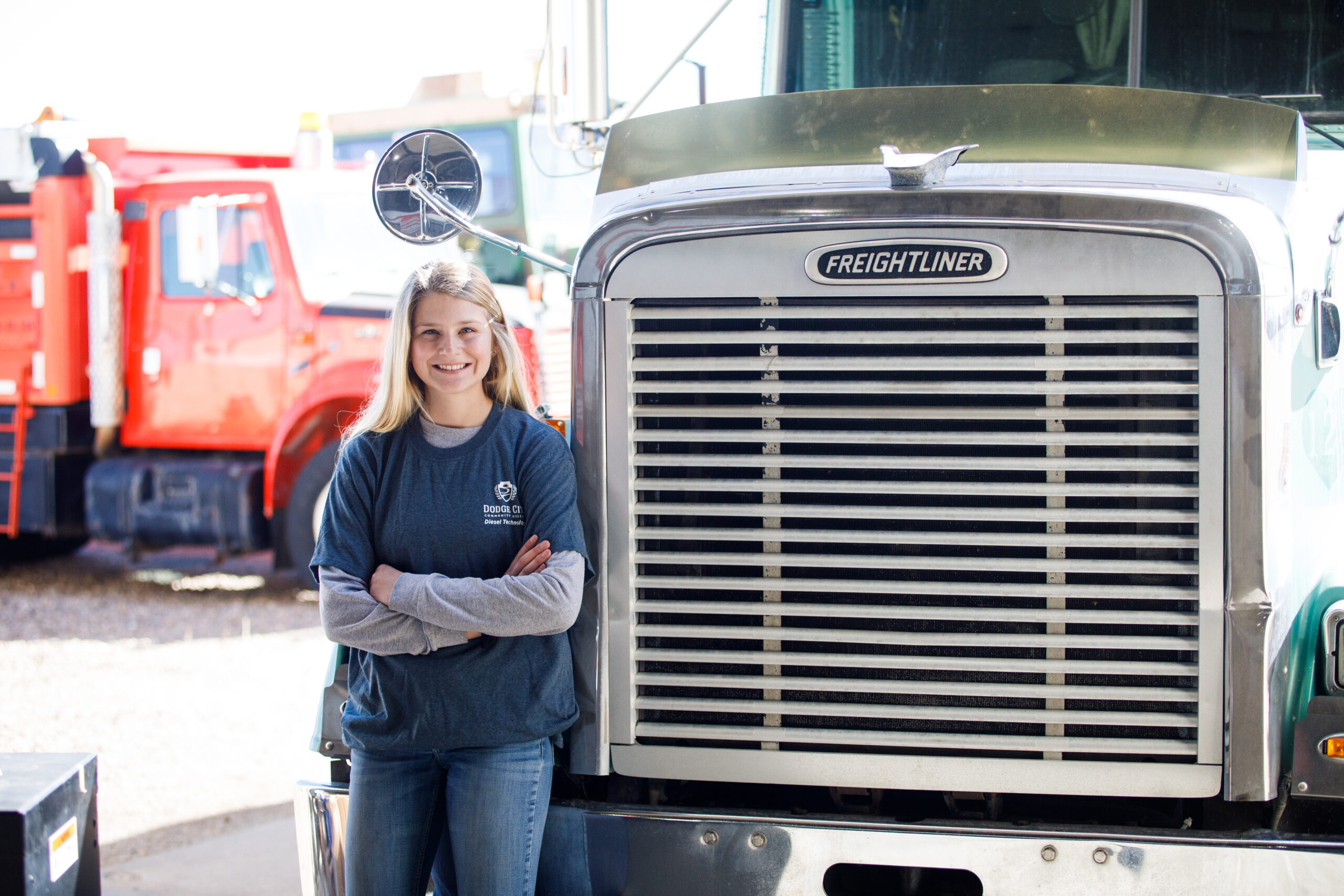
The program is designed to prepare students to accept a responsible and professional position in the diesel and/or heavy equipment industry. The goal is for the students to meet the education requirements of a professional diesel technician.
Diesel Technology is a career that is important to the transportation industry as well as construction and agriculture. Students interested in farming can take advantage of being able to work on their own equipment and save thousands of dollars in repair costs. Dodge City Community College’s Diesel Technology program offers a wide variety of courses. These courses can prepare the student for either employment in the workforce, or they can be used as a basis to build on with a transfer to a four-year program.
Program Information
About Program (Skills)
Students completing the Diesel Technology program will gain the following:
- Customer Relations, communicating issues with customers, etc.
- How to properly write work orders to address repairs.
- Skills in rebuilding engines and identifying engine components.
- Troubleshooting of Heavy-duty truck components.
- Knowledge in alignment of heavy duty and light duty vehicles.
- Learning components and troubleshooting of pneumatic brake and hydraulic brake systems.
- Knowledge in electrical systems and troubleshooting components.
Career Options
Graduates of the Diesel Technology program may pursue the following careers:
- Service Technician performing repairs on heavy duty equipment.
- Service Manager positions may become an option with experience in the field.
- Parts sales may also become an option following program.
- Truck sales position, selling heavy duty vehicles.
- Store Manager positions may be available following experience in field.

2 years (68 credits)
Associate of Applied Science

1 year (53 credits)
Certificate
Tuition
$30*/per credit hour
Fees
$105**/per credit hour
Books
All materials are included
Other Program Fees
$2,250
* This rate applies to residents of Ford County. The rate for residents outside of Ford County is $60/per credit hour. International rate is $80/per credit hour.
** Online Courses have an additional $10/per credit hour fee.
Tuition and fees are subject to change

Fall
Students may start this program at the beginning of the fall semester.

Job Outlook*
Bus and Truck Mechanics – 10.1% Growth
Farm Equipment Mechanics – 7.8% Growth

Annual Median Salary*
Bus and Truck Mechanics – $45,916
Farm Equipment Mechanics – $45,496
*As of August 2025
Faculty
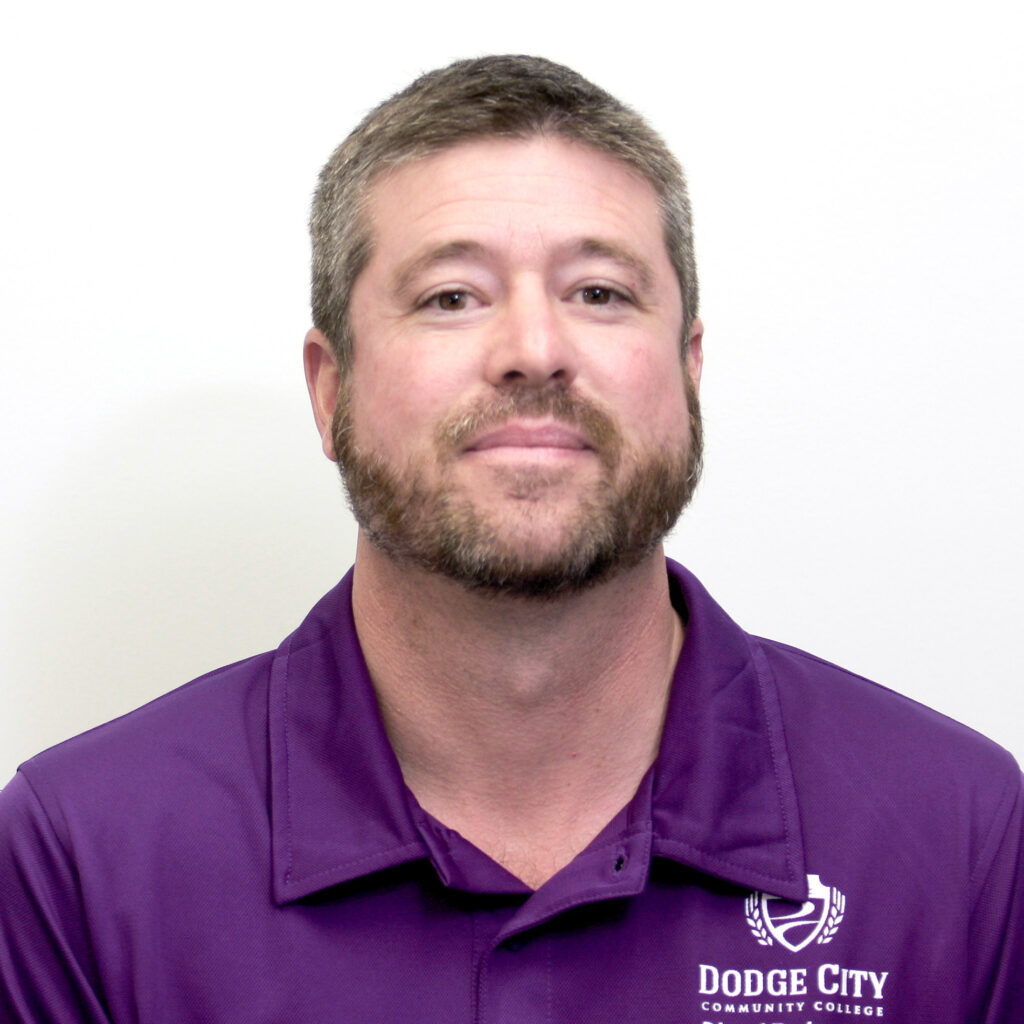
Colby Kline
Professor of Diesel Technology
AAS Diesel Technology, ASE Master Truck Certified, Hunter Engineering Alignment Certified, Former Freightliner Dealer Trainer, HVAC Section 609 Certified

Jose Ruiz
Assistant Professor of Diesel Technology
Multiple Snap-On Certifications
Sample Degree Plan
Year 1
Fall I: (18 Credits)
- DIE 100-1001 – Shop Operation/Customer Relation – 5 Credit
- DIE 140-1002 – Brakes – 3 Credits
- DIE 160-1002 – Suspension & Steering – 3 Credits
- OSHA 110-1001 – OSHA 10 – 1 Credits
- Computer Sci Basic Skill – See list at MyDC3 – My Course Needs T▶ – 3 Credits
- 3 PE OR HLTH 101 – 3 PE Electives OR First Aid T▶ – 3 Credits
Spring I: (18 Credits)
- DIE 110-1001 – Electrical/Electronic Systems – 5 Credits
- DIE 120-1002 – Diesel Engines I – 5 Credits
- DIE 130-1001 – HVAC – 5 Credits
- *^ENG 101, 102, OR 104 – Technical Communication OR English Comp I T▶ – 4 Credits
Year 2
Fall II: (19 Credits)
- DIE 170-1001 – Hydraulics – 7 Credits
- DIE 180-1001 – Advanced Diesel Engines – 7 Credits
- DIE 190-1001 – Drive Trains – 5 Credits
Spring II: (13 Credits)
- DIE 200-1001 – Adv. Electrical/Electronic Systems – 7 Credits
- DIE 230-1001 – Drive Trains II (Optional) – 6 Credits
- MATH 089 OR above – Basic Applied Math (or above) See list at MyDC3 – My Course Needs T▶ – 3 Credits
- *SP 106 OR *SP 206 – Public Speaking OR Interpersonal Communications T▶ – 3 Credits
Year 1
Fall I: (12 Credits)
- DIE 100-1001 – Shop Operation/Customer Relation – 5 Credit
- DIE 140-1002 – Brakes – 3 Credits
- DIE 160-1002 – Suspension & Steering – 3 Credits
- OSHA 110-1001 – OSHA 10 – 1 Credits
Spring I: (15 Credits)
- DIE 110-1001 – Electrical/Electronic Systems – 5 Credits
- DIE 120-1002 – Diesel Engines I – 5 Credits
- DIE 130-1001 – HVAC – 5 Credits
Year 2
Fall II: (19 Credits)
- DIE 170-1001 – Hydraulics – 7 Credits
- DIE 180-1001 – Advanced Diesel Engines – 7 Credits
- DIE 190-1001 – Drive Trains – 5 Credits
Spring II: (7 Credits)
- DIE 200-1001 – Adv. Electrical/Electronic Systems – 7 Credits
- DIE 230-1001 – Drive Trains II (Optional) – 6 Credits
Key
T▶ Kansas Systemwide Transfer Course
* Course requires a C or higher
^ Course has a testing or prerequisite requirement
Click here to see all of our available Degree Maps.